

When is Wisdom Tooth Removal Actually Necessary?
- Written by Dental Elements
- Medically Reviewed by Dr. David Thurman, DDS
- Published: August 2026 · 6 min read
KEY TAKEAWAYS
Wisdom teeth that are impacted, partially erupted, or actively causing damage to adjacent healthy teeth are common candidates for surgical removal.
Fully erupted wisdom teeth that meet in a stable bite, are easily accessible for cleaning, and show no pathology can often be retained with regular monitoring.
Partially erupted wisdom teeth frequently trap bacteria under the gum tissue, leading to recurrent, painful infections.
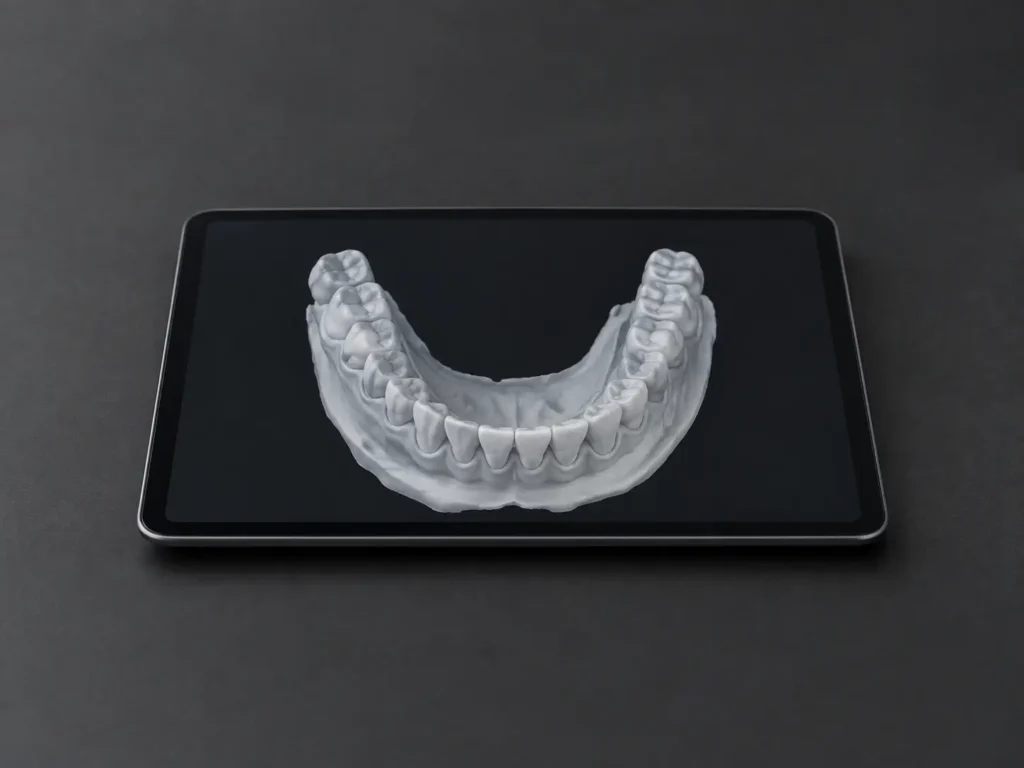
Dr. Thurman utilizes advanced 3D imaging at our Downtown Denver clinic to accurately diagnose the position and angulation of your third molars.
Asymptomatic wisdom teeth still require periodic evaluation because significant problems, such as cysts or decay, can develop silently over time.
What Is the Difference Between Impacted, Erupted, and Asymptomatic Wisdom Teeth?
Understanding how your wisdom teeth (third molars) are developing dictates whether extraction is a clinical necessity.
01
Impacted
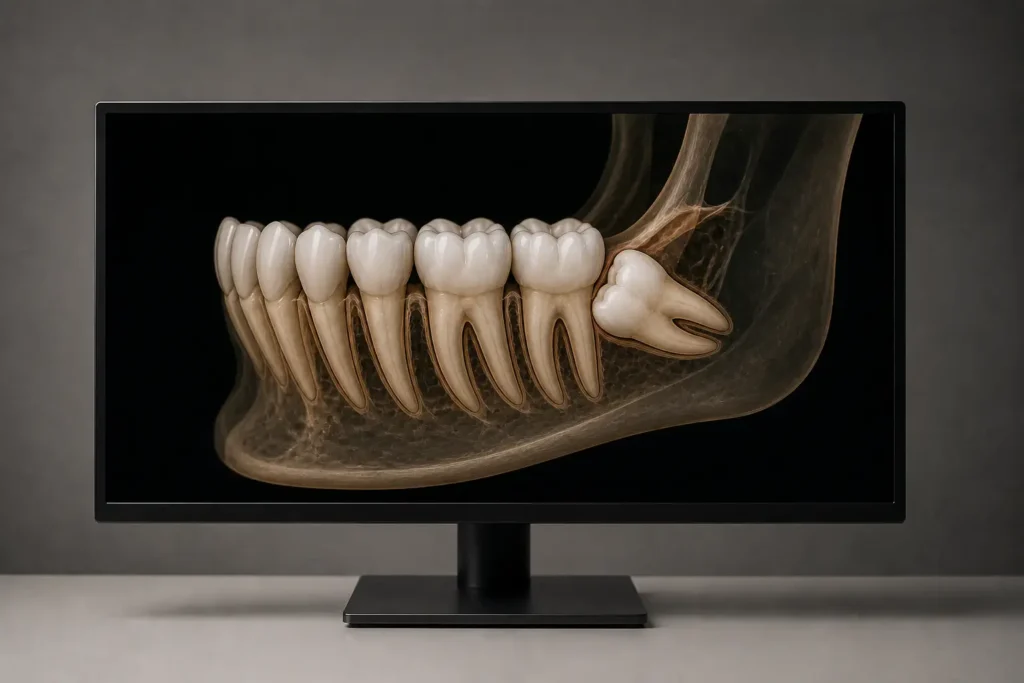
The tooth remains fully or partially trapped beneath the gum and bone, unable to erupt into a functional position. Impaction significantly increases the risk of infection, cyst formation, and structural damage to the neighboring molar.
02
Partially Erupted
Part of the tooth has emerged while the rest remains covered by a flap of gum tissue. This flap easily traps food and bacteria, leading to a painful, recurring infection called pericoronitis.
03
Fully Erupted and Asymptomatic
The tooth has emerged completely into the mouth and is not currently causing pain. If the tooth is properly aligned and cleanable, it can often be retained, though it requires ongoing monitoring.
When Is Wisdom Tooth Removal Typically Recommended?
Wisdom tooth removal is commonly recommended when there is clear evidence that the tooth is creating—or is highly likely to create—a clinical problem. Extraction is advised if the tooth is associated with recurrent pain, chronic infection, extensive decay that cannot be predictably restored, or if its angle is actively resorbing the roots of the adjacent second molar.
The decision balances current symptoms against the likelihood of future complications. Because wisdom teeth are located at the very back of the mouth, even properly aligned ones can be incredibly difficult to clean, making them highly susceptible to decay over time.
Can You Keep Your Wisdom Teeth If They Don't Hurt?
A lack of pain does not guarantee that a wisdom tooth is healthy or harmless. An asymptomatic wisdom tooth may be actively causing silent damage before you feel any discomfort. For example, a deeply impacted tooth can develop a symptomless cyst that quietly destroys the surrounding jawbone.
Routine panoramic or 3D X-rays are required to evaluate the angle of the roots and their proximity to the mandibular nerve. If clinical imaging confirms the teeth are fully functional and healthy, your dentist may choose to safely monitor them rather than extract them.

Dr. David Thurman, DDS
- D.D.S., The Ohio State University (2007)
- Founder, Dental Elements
- 19+ Years of Clinical Practice
Related Services
Wisdom Teeth Removal
Prevent crowding and infections through the safe, precise extraction of third molars.

Sedation Dentistry
Comfort options designed for anxious patients undergoing wisdom tooth extraction.



YOUR DENTAL HOME STARTS HERE
Wondering whether your wisdom teeth need to be removed or can be safely monitored?
A comprehensive evaluation that includes advanced imaging provides a clear, honest assessment of the health and positioning of your third molars.