

Tongue & Lip-Tie Release in Downtown Denver
- Best For: Restricted tongue mobility, speech limitations, and tension-induced gum recession
- Typical Visits: 1 visit, plus a follow-up check
- Anesthesia: Local anesthetic (topical + local)
Restoring natural mobility to the mouth
What are the signs of a restrictive tongue or lip tie?
Restricted Tongue Mobility
The inability to lift your tongue to the roof of your mouth, stick it out past your lips, or move it side to side through its normal range.
Speech Difficulty
Chronic difficulty articulating specific sounds because the tongue cannot reach or move the way articulation requires.
Gum Recession
A tight upper lip frenulum constantly pulling on the gum tissue above your front teeth, causing the gums to recede and expose the roots.
A Front Tooth Gap
A thick labial frenum that extends between the upper front teeth, preventing them from closing and creating a stubborn gap (diastema).
A Fast, Minimally Invasive Procedure
Functional Assessment
Dr. Thurman evaluates the specific range of motion the frenulum is restricting—speech, eating, or hygiene—before recommending release.
Anesthesia & Comfort
A topical numbing gel is applied first, followed by local anesthesia so the localized area is fully numb before treatment.
Precise Tissue Release
The restrictive band of tissue is quickly and cleanly separated using a precise, minimally invasive technique.
Aftercare & Stretching
You will receive specific stretching exercises to perform during healing, which help the tissue heal without reattaching too tightly.

Evaluating the structural impact
A tongue or lip tie is not just a soft tissue issue; it can heavily impact the structural health of your teeth and gums. As a single-provider practice in Downtown Denver, Dr. Thurman evaluates frenum restrictions holistically—treatment is based on what the tissue is functionally limiting, not just how it looks. If a tight lip-tie is causing severe gum recession, we do not just release the tie; we can seamlessly plan the necessary gum grafting to restore the lost tissue. Because aftercare stretching is essential to a successful outcome, patients get clear, specific guidance directly from Dr. Thurman rather than a general handout, with a follow-up visit to check healing.
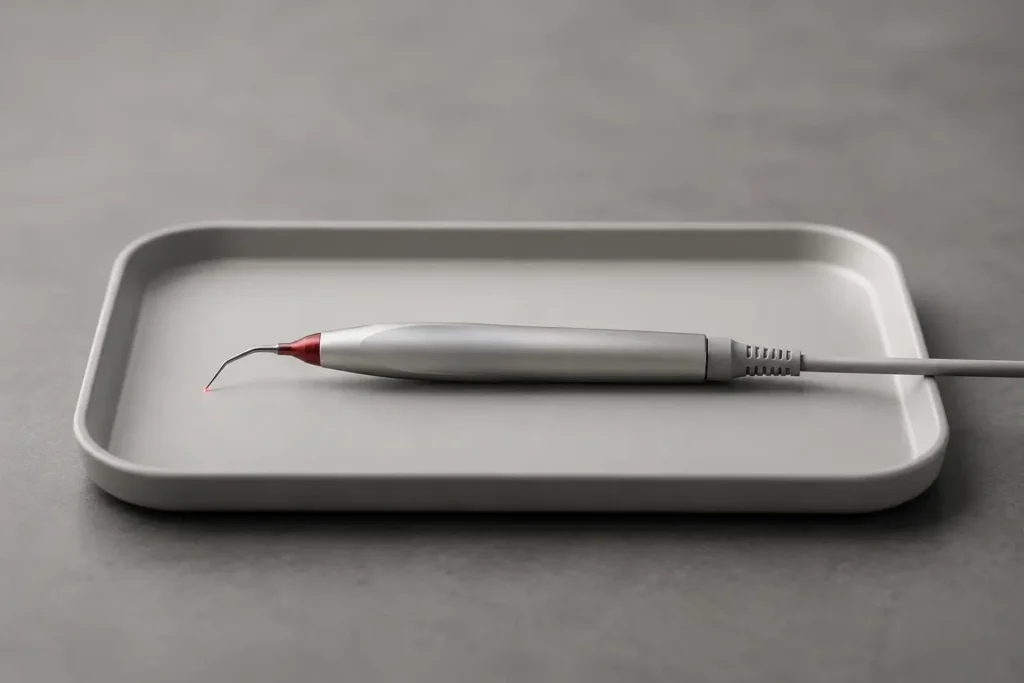
At Dental Elements, we frequently utilize advanced soft-tissue dental lasers to perform frenectomy procedures. A laser release provides significant benefits over traditional surgical scissors or scalpels. The laser instantly vaporizes the restrictive tissue while simultaneously sealing the blood vessels and nerve endings. This results in virtually no bleeding, significantly less postoperative discomfort, and a drastically accelerated healing timeline—often completely eliminating the need for traditional stitches.
Advanced laser technology for a gentle release
Myofunctional Therapy and Post-Operative Care
Not every tongue-tie needs to be released—some cases with mild or no functional impact are better managed by monitoring or speech therapy alone. Release is most appropriate when the tissue is clearly limiting speech, eating, periodontal health, or hygiene.
It is critical to understand that a release only provides the potential for new movement. If you have lived with a restricted tongue for decades, your facial and jaw muscles have formed deep compensatory habits. To achieve proper swallowing and speech improvements, the release procedure must often be paired with myofunctional therapy or traditional speech therapy. Finally, strict adherence to the prescribed post-operative stretching exercises is mandatory; skipping it increases the chance the raw tissue heals back together and re-forms the restriction.
Frequently Asked Questions About Frenectomies
Does the release procedure hurt?
How long does it take to heal?
Will it fix my speech immediately?
Is this only for babies?
How much does a frenectomy cost?
Ready to restore your natural mobility?
Schedule an evaluation with Dr. Thurman to determine if a simple tongue or lip-tie release can improve your oral function and comfort.