

Dental Implants vs. Dentures: Comparing Options for Missing Teeth
- Written by Dental Elements
- Medically Reviewed by Dr. David Thurman, DDS
- Published: August 2026 · 7 min read
KEY TAKEAWAYS
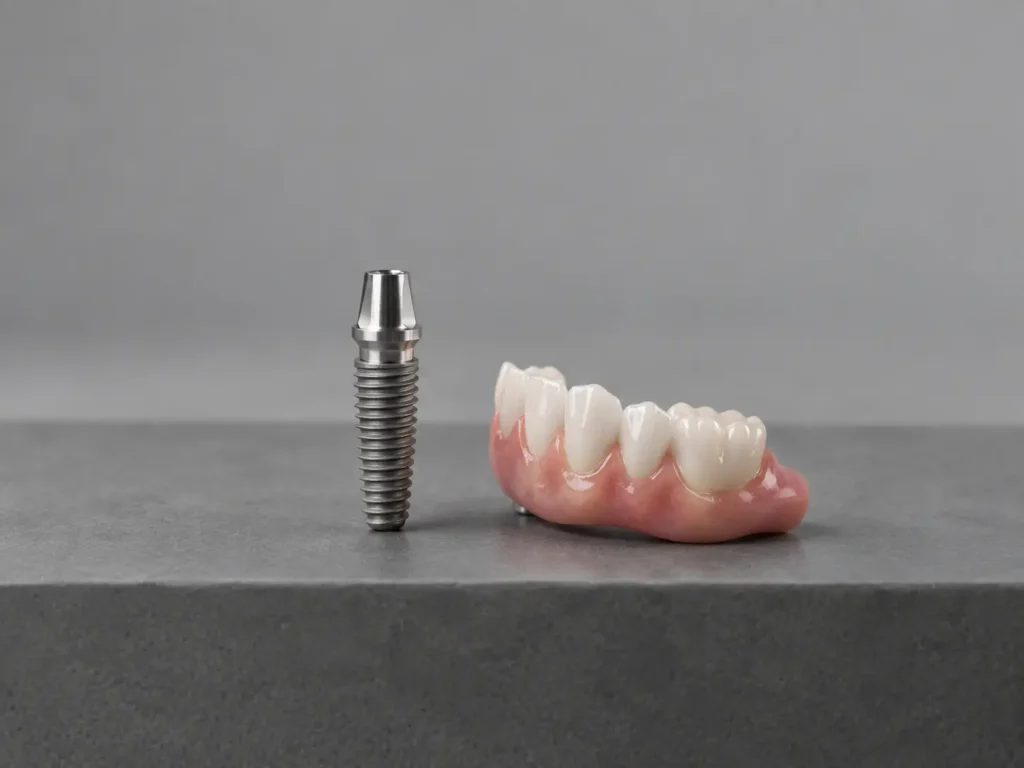
Dental implants replace the tooth root itself, which integrates with and helps preserve the underlying jawbone in a way that dentures alone cannot.
Traditional removable dentures sit on top of the gums and rely on suction, adhesives, or clasps for retention.
Implants are fixed in place and function closely to natural teeth, while traditional dentures are removable and require daily cleaning outside the mouth.
Patients at Dental Elements in Downtown Denver evaluating options for missing teeth often prioritize stability and the ability to eat a full range of foods.
What Are the Core Differences Between Implants and Dentures?
| Feature | Dental Implants | Traditional Dentures |
|---|---|---|
| Stability | Fixed in place; no movement during function | Can shift or lift; may require daily adhesive |
| Bone Preservation | Stimulates bone, helping maintain jaw volume | No stimulation; progressive bone loss common |
| Chewing Efficiency | Close to natural bite force | Reduced; certain hard foods may be difficult |
| Daily Maintenance | Brush and floss like natural teeth | Remove nightly to thoroughly clean and soak |
Why Does Bone Preservation Matter for Missing Teeth?
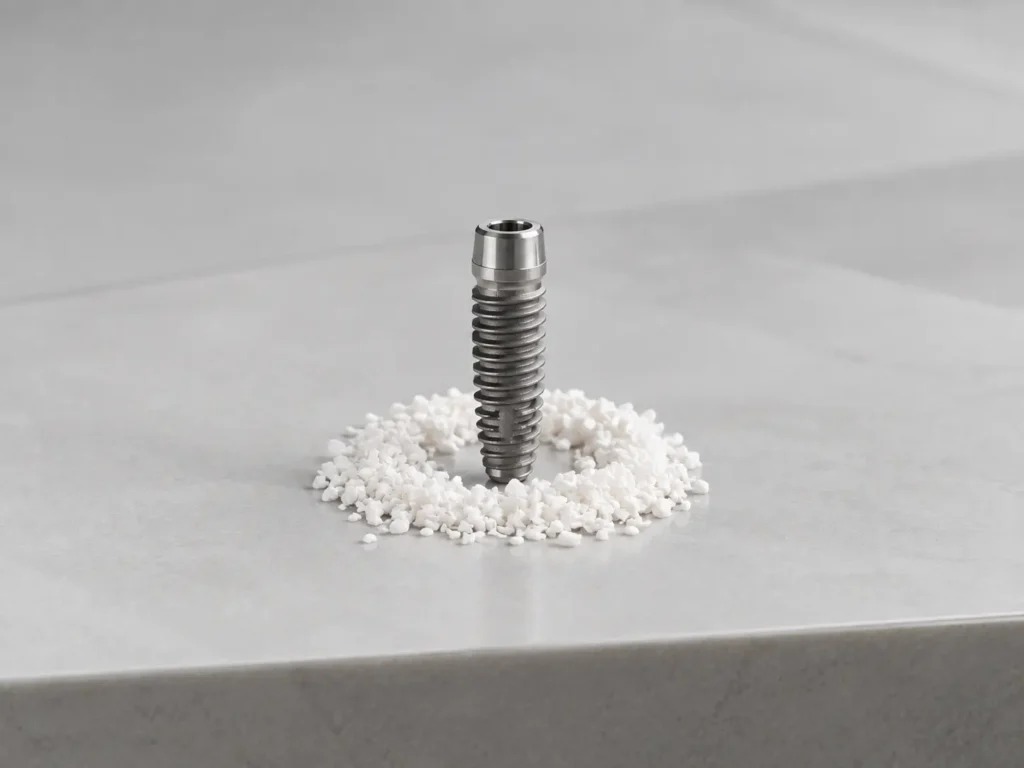
When a tooth root is missing, the jawbone in that area gradually loses density over time because it no longer receives the stimulation that chewing normally provides. Implants physically replace that root-level stimulation, which is why they are associated with far better long-term bone preservation than dentures.
Because traditional dentures sit passively on the gum tissue, they do not prevent this progressive ridge resorption. As the jawbone continues to change shape over the years, the denture will begin to slip, requiring periodic clinical relining or complete replacement to maintain a functional fit.
Want the stability of implants with the coverage of a denture?

Dr. David Thurman, DDS
- D.D.S., The Ohio State University (2007)
- Founder, Dental Elements
- 19+ Years of Clinical Practice
Related Services

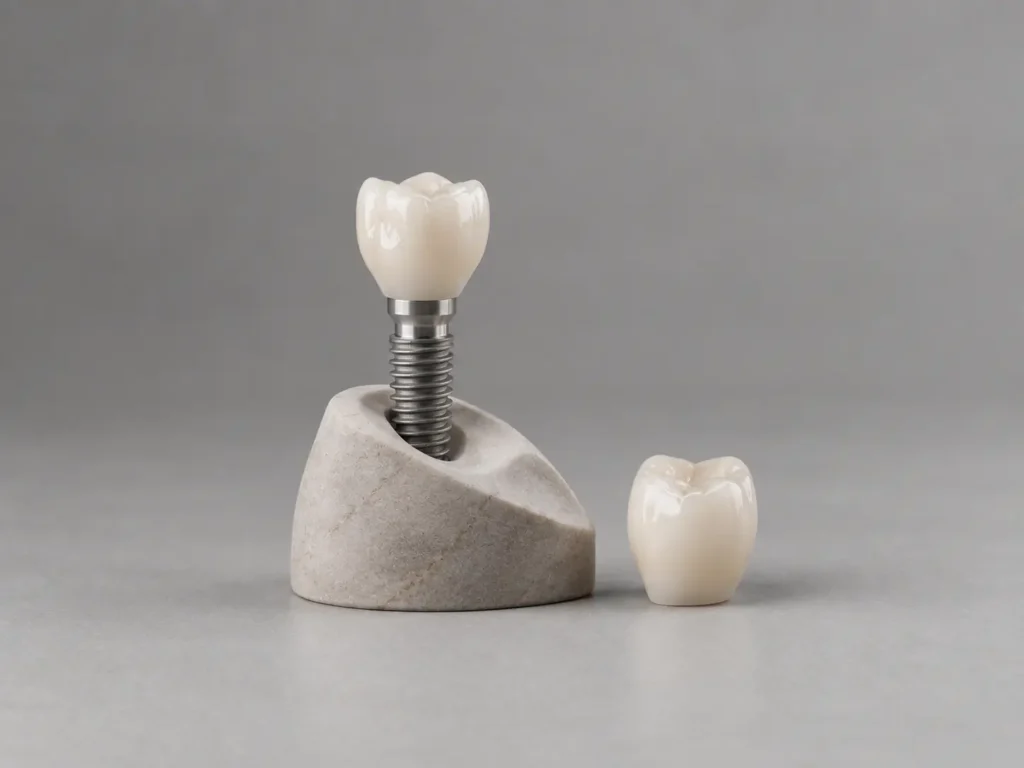
Dental Implants
A root-level replacement that helps preserve jawbone and restores natural chewing function.
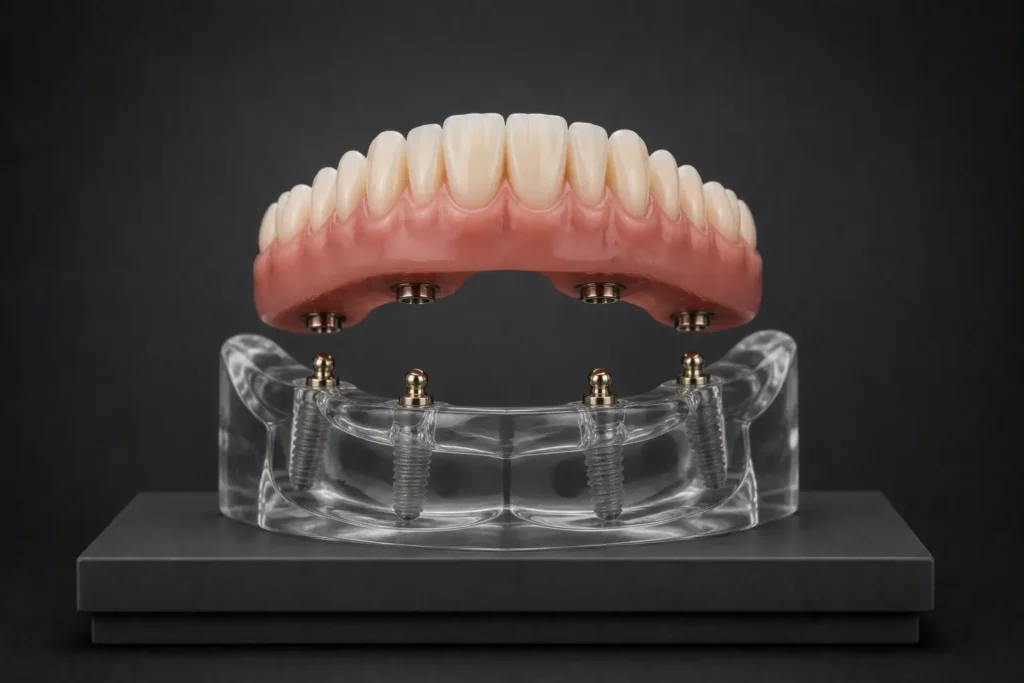
Implant-Supported Dentures
A hybrid solution combining surgical implant stability with denture-style coverage.

YOUR DENTAL HOME STARTS HERE
Weighing dental implants against traditional dentures for your specific situation?
A comprehensive examination that includes 3D imaging of your bone volume helps identify the solution that best restores your function and confidence.